The short answer
The cost of an AI agent depends on how many systems it connects to and what it's allowed to do. These are our published starting prices:
| What you're building | Starting price | Typical scope |
|---|---|---|
| A scoped plan and fixed quote | $950 | Two-week AI Workflow Audit |
| One AI feature in an existing app | from $2,500 | An assistant, smart search or document reading |
| A first production agent | from $4,500 | One agent with tools over your data, approval, tests and logging |
| An agent plus the software around it | from $6,500 | More integrations, an admin console or a mobile app |
| A larger platform | planned in phases | Priced phase by phase, with something usable at the end of each |
| Ongoing hourly work | $31 to $36 an hour | A dedicated developer, by contract length |
Treat these as minimums. The fixed quote for your build comes from the scope, and you approve it before work starts. Running costs come on top: model usage and hosting, billed at cost.
What you get at each price
$950: a plan and a fixed quote
The AI Workflow Audit takes two weeks. It maps one workflow, checks your data and systems, and gives you an architecture sketch, a build plan and a fixed quote. It's credited against a build started within 60 days.
From $2,500: one AI feature
A Feature Build adds one AI feature or integration to an app you already have. It's wired into your data and permissions, with usage limits, cost tracking and a bug-fix window after launch.
From $4,500: a first production agent
A First AI Workflow is one agent connected to your systems. It includes tools over your data, human approval for actions, evaluation tests, logging, weekly demos and a handover. It usually takes three to six weeks after the scope is signed.
From $6,500: an agent with its own software
An Extended Build adds more tools and integrations, plus an admin console or a Flutter mobile app around the agent, with milestone billing on demos.
Larger platforms: priced in phases
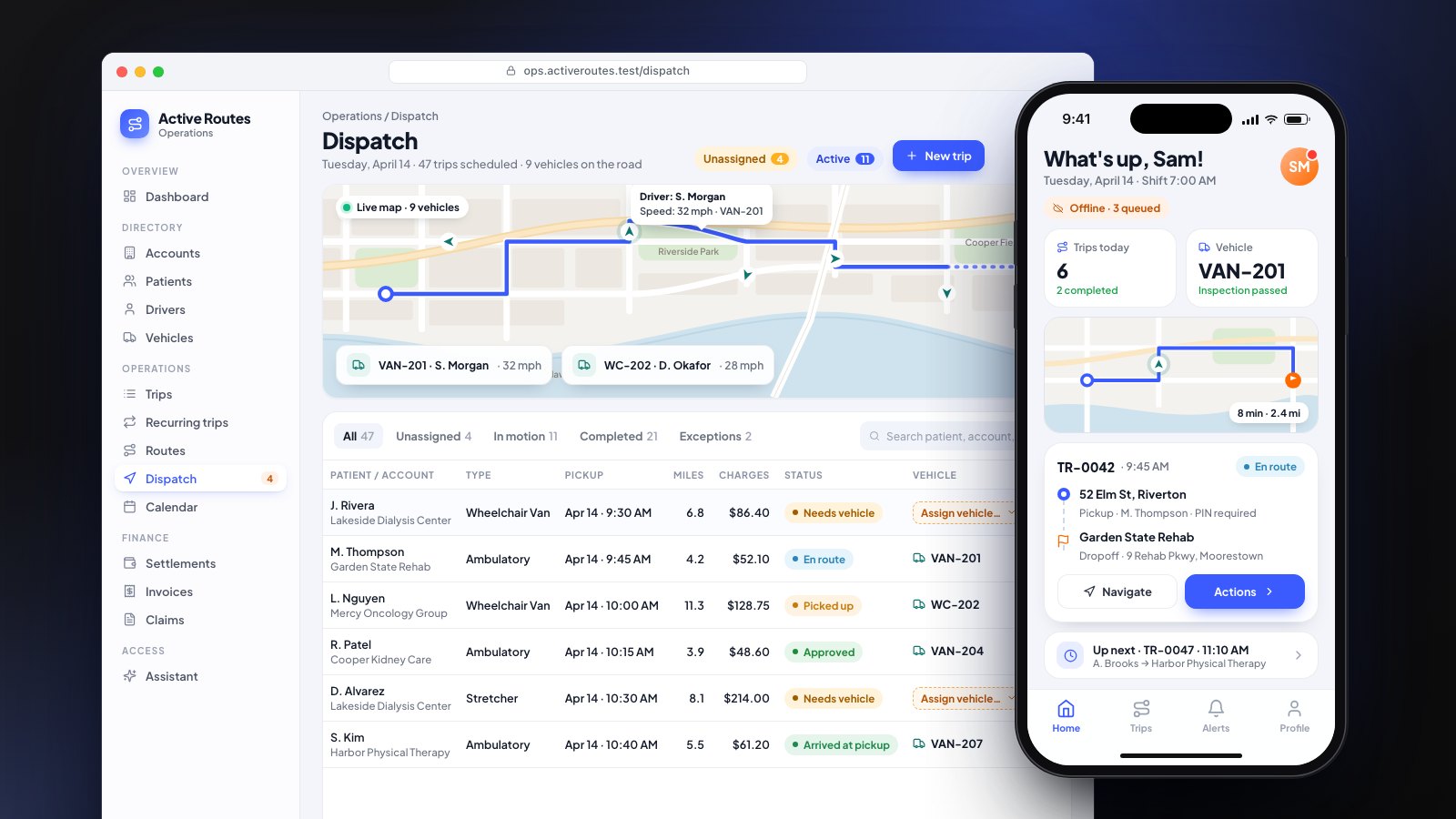
Some agents sit inside a full platform. Our NEMT dispatch platform includes dispatch, billing, compliance, a driver app and an AI assistant. Builds of that size are planned in phases, each with its own scope and price.
How these prices compare
Most published market prices for AI agents and chatbots start higher than ours. Here is what four current pricing guides say, in their own words.
- Clutch. The B2B review site's AI pricing guide says "AI development projects reviewed on Clutch range anywhere from $10,000 to $49,999," and that "the average cost for an artificial intelligence development company project is $120,594.55." It adds that most AI development companies listed on Clutch charge "between $24-$49/hour."
- ScienceSoft. The software company's AI chatbot development guide says conversational AI assistant costs "typically start at $20,000-$70,000 for simple FAQ-style bots." Mid-range assistants that automate workflows through CRM, ticketing or scheduling integrations cost "$80,000-$250,000." Its ranges exclude software licenses, cloud hosting and AI model usage.
- Cleveroad. The development company's AI agent cost guide says "the cost to build an AI agent in 2026 ranges from $40,000 to $120,000+," depending on the agent's autonomy, tool integrations and how much knowledge it handles.
- ITRex. The development company's AI agent cost guide says that for a simple rule-based bot, "US-based AI developers usually charge $5,000-$25,000." It puts enterprise-grade generative AI agents at "$100,000-$500,000 (and counting)."
How to read these numbers
Each guide is published by a company that sells development work, and each defines an agent differently. A range that covers enterprise systems across many departments isn't comparable to one workflow.
Our prices are starting points for a fixed, narrow scope: one feature, or one agent on one workflow. A larger platform with us is planned in phases, and the phases add up, so a big build costs more than our starting prices. Our dedicated developer rate, $31 to $36 an hour, falls within the hourly range Clutch reports.
The fair comparison is quote against quote for the same scope. The questions at the end of this guide help you get there.
What drives the cost of an AI agent
Six things move the price more than anything else.
1. Integrations
Each system the agent reads from or writes to needs tools, permissions and tests. A system with a clean API costs less to connect than one with no API, where data has to come from exports or screens.
2. Data
Agents answer from your data, so its state matters. Clean, structured records in one place cost less to work with than scattered spreadsheets, PDFs and photos. Reading documents, such as invoices or receipts, adds work for extraction and checking.
3. Evaluation
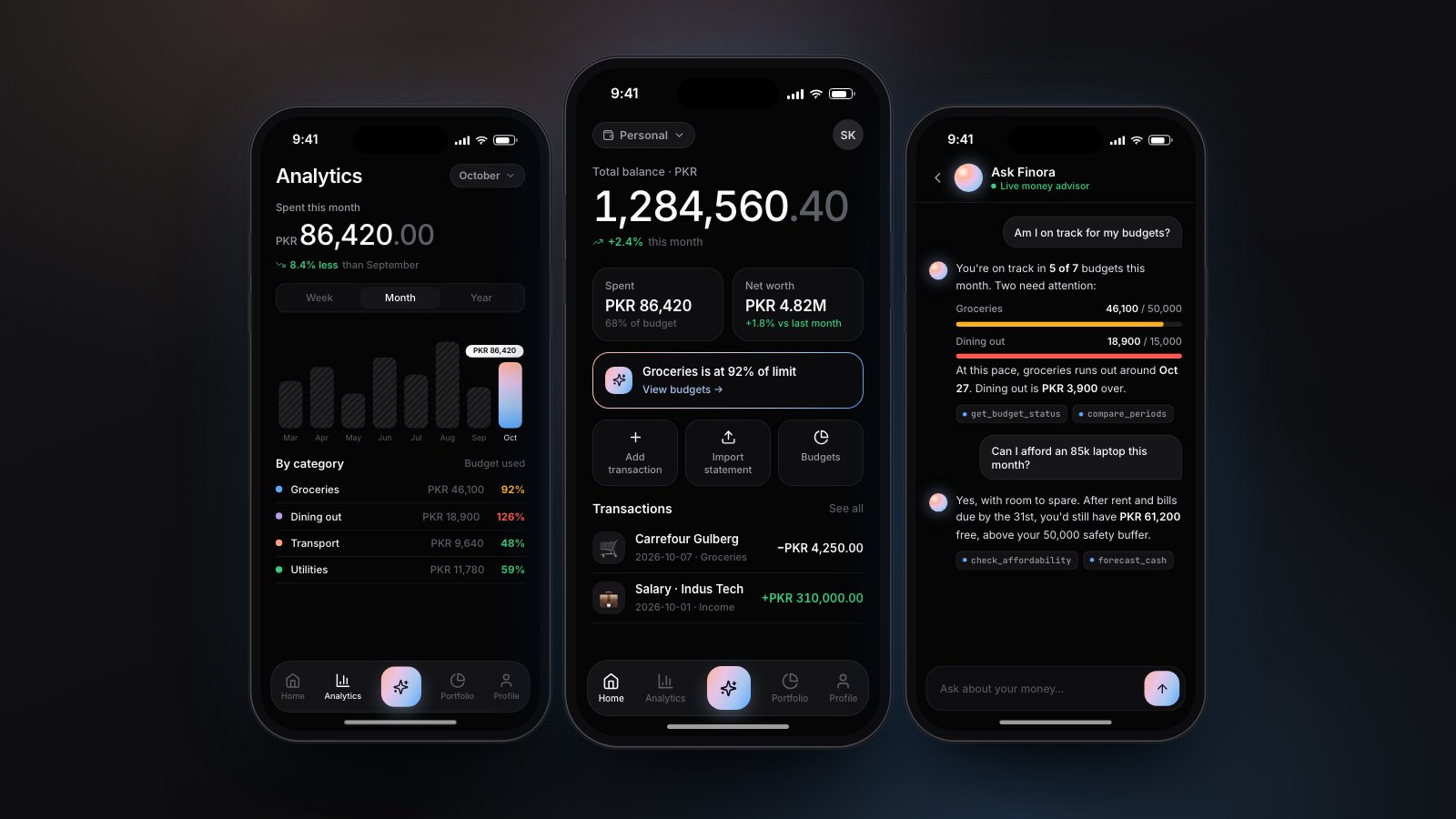
A production agent needs tests with known answers. In Finora, our own finance app, an evaluation suite checks 20 advisor questions against answers verified in SQL. More question types and higher stakes mean more tests.
4. Human approval
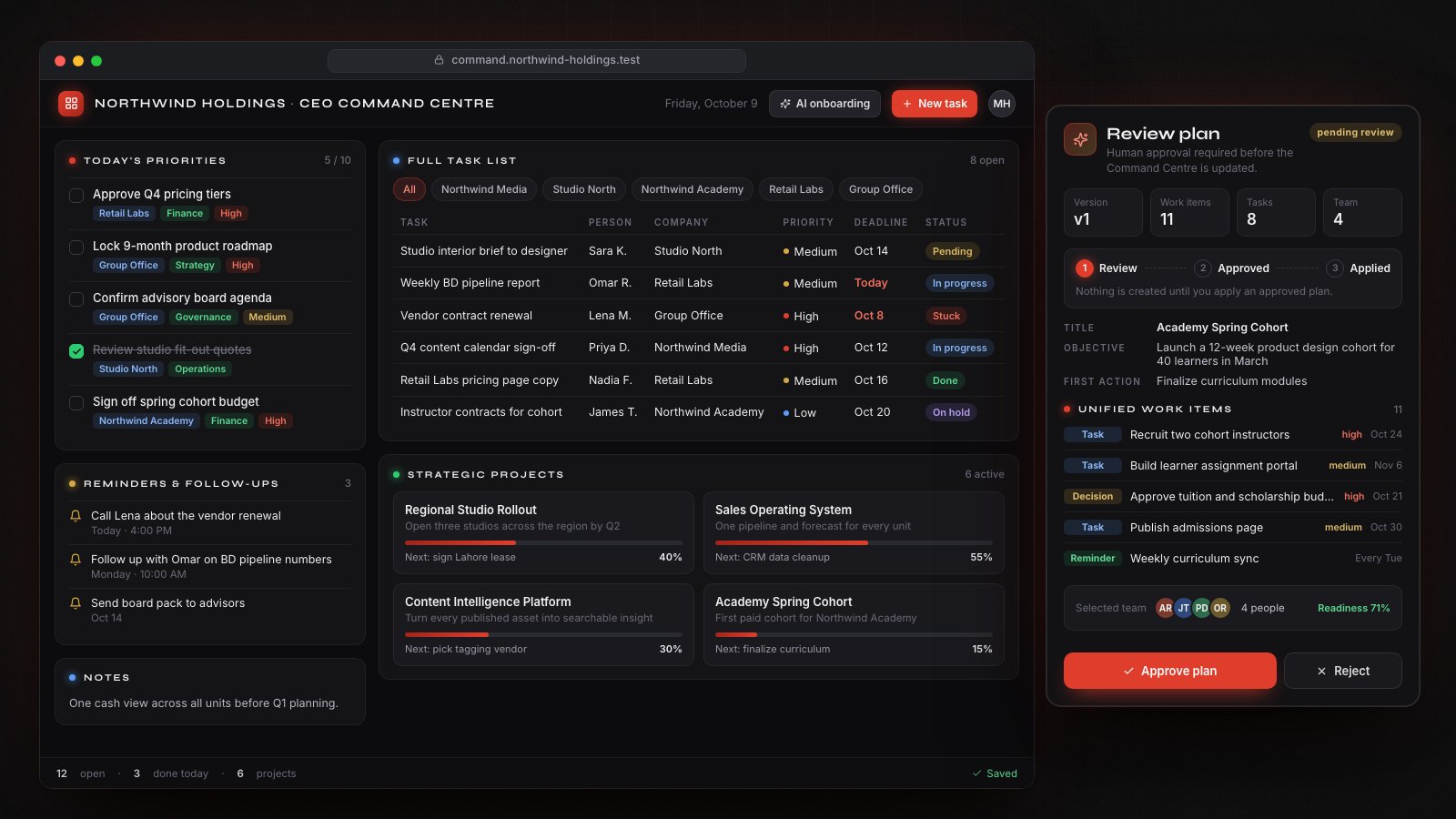
Read-only agents are the cheapest to build safely. Once an agent can change data, each action needs an approval step, a screen for the person approving it, and logging. In our executive command center, nothing the assistant drafts is saved until a person approves it.
5. The interface
A chat panel inside an app you already have costs less than a new admin console or a mobile app. The interface is often the line between a First AI Workflow and an Extended Build.
6. Model usage and hosting
They're running costs, separate from the build price. Model usage depends on how many requests the agent handles, how much text each request carries and which model you pick. We bill model usage and hosting at cost, never marked up.
Running costs after launch
An AI agent keeps costing a little after launch, and you should plan for it.
- Model usage. Billed at cost by request volume. Usage limits and cost tracking are part of the build, so spending is visible and capped.
- Hosting. Servers, storage and databases, billed at cost.
- Upkeep. Models and APIs change. After the bug-fix window, a monthly care plan covers model and API changes, prompt and evaluation upkeep, monitoring and small changes. Ask for its price with your quote.
How to keep the cost of an AI agent down
Six ways to spend less without dropping tests or approval.
- Start with one workflow. Prove the value on one fixed-scope build before committing to anything bigger.
- Start read-only. An agent that answers questions is cheaper and safer than one that takes actions. Add actions later, with approval.
- Use the app you have. Adding a feature to an existing app costs less than building a new one.
- Fix data access first. If the audit shows your data isn't reachable yet, fixing that first saves paying for workarounds.
- Pick the cheapest model that passes the tests. Evaluation tests show whether a smaller, cheaper model is good enough for the job.
- Send less to the model. Narrow tools return only what a question needs, which keeps each request small.
Build or buy?
Off-the-shelf AI tools, such as the assistant built into your help desk or CRM, are often the right first step. A custom agent makes sense when those tools can't reach your data or follow your rules.
When an off-the-shelf tool is enough
- Your workflow matches how the tool already works
- The data it needs already lives inside that tool
- You need it running this week, and a subscription fits the budget
- Nobody needs to change what it can see or what it's allowed to do
When a custom agent is worth building
- Answers depend on data spread across your own systems, such as a dispatch database, a ledger or a camera feed
- Actions need your own approval rules, permissions and an audit log
- You want to own the code, prompts and configuration, and choose the model
- The workflow is specific to your business, so no product covers it well
The trade-offs
A custom agent costs more up front. A first workflow usually takes three to six weeks, and it needs upkeep when models and APIs change. An off-the-shelf tool starts faster, but you work within its features, its data access and its pricing, and its vendor decides what changes.
Many teams do both: they buy tools for generic tasks and build for the one workflow only they have. If you're not sure which side you're on, the AI Workflow Audit answers that before you spend money on a build.
Questions to ask any AI agent developer
Prices are only comparable if the scope is. Ask every vendor:
- Is the price fixed, and what happens if the scope changes?
- Are evaluation tests, logging and human approval included, or extra?
- Are model and hosting costs passed on at cost or marked up?
- Who owns the code, prompts and configuration when the work is paid for?
- Will I talk to the engineers who do the work?
- What happens after launch, and what does upkeep cost?
Our answers: fixed price approved before we start, tests, logging and approval included, model and hosting at cost, and you own the code, prompts and configuration once paid for. See pricing, AI agent development and security and data.
Sources
Figures above were checked on each source page in October 2026.
- Clutch, AI Pricing Guide
- ScienceSoft, AI chatbot development
- Cleveroad, AI agent development cost in 2026
- ITRex, How to calculate AI agent development cost